How to use this Lookup Table
This table takes several seconds to load intially and to reappear after making filter selections.
This table allows you to search and filter for forb species with certain attributes. Most columns can be filtered using the second row of the table. Information is grouped into categories indicated and color coded according to graphic below.
Clicking on any row will bring up the entirety of data available for the species including a photo and distribution map of the species, descriptions for many of the yes/no columns, a link back to the complete species review, and more.
Empty cells indicate a lack of this information currently or as of the posting of the species' review.

| Species Image | Image credit | Common name | Plant family (Common) | Plant family (Scientific) | Genus | Species | More information | Recent scientific name change? | Alternate scientific name | Subtaxa? | Hybridization? | Degree of hybridization | Hybridizes within | Polyploid? | Life cycle | Longevity | Growth form | Growth habit | Max height at maturity (in) | Min height at maturity (in) | Max width at maturity (in) | Min width at maturity (in) | Stem leaves | Basal leaves | Leaf arrangement | Leaf persistence | Leaf type | Root system | Max root depth (in) | Max root spread (in) | Occurrence | Occurrence map | Map description | Major plant associations | Max elevation (ft) | Min elevation (ft) | Max precipitation (in) | Min precipitation (in) | Soil texture range | Predominant soil texture | Soil pH, salinity, sodicity | Description of soil pH, salinity, sodicity | Soil depth | Successional status | Disturbance tolerance | Light requirement | Inflorescence type | Flowers per inflorescence | Individual flower color | Flower type | Flower type details | Pollination type | Pollination agent | Animal pollinators | Fruit description | Plant flowering and fruit ripening pattern | Description of flowering and fruit ripening pattern | Dehiscence | Dispersal unit | Dispersal agent | Dispersal rate | Description of seed dispersal and rate | Flowering phenology (location dependent) | More than one flowering event possible in a single growing season (e.g. flowers in spring and again in fall)? | Date of fruit maturation (location dependent) | Structure collected | Maturation indicators | Seed color | Common seed predators | Characteristics of damaged, low quality fruit/seed | Uniformity of ripening | Description of fruit ripening (within and among plants) | Quick tests of seed fill/quality | Harvest window duration | Wildland harvest method(s) | Wildland harvest equipment | Post-harvest management | Special post-harvest management notes | General seed cleaning procedure | Seed cleaning protocol available? | Average clean-out ratio (clean/rough) | Clean-out ratio (min) | Clean-out ratio (max) | Clean-out ratio (number of samples) | Seed dormancy type | AOSA protocol for evaluating viability? | Time required to test viability | Viability protocol is for the: | AOSA test for germination? | Time required to test germination | Germination test is for the: | Average purity (%) | Purity (min %) | Purity (max %) | Purity sample size (n) | Average fill (%) | Fill (min %) | Fill (max %) | Fill sample size (n) | Average viability (%) | Viability (min %) | Viability (max %) | Viability sample size (n) | Bulk seeds/lb (min) | Bulk seeds/lb (max) | Bulk seeds/lb sample size (n) | PLS (min) | PLS (max) | PLS sample size (n) | Seed type | Cold storage required? | Seed production research conducted? | Soil protective measures | Treatments to enhance germination (Seed Production) | Method (equipment) | Seeding date | Seeding depth (in) | Does fertilization increase seed yield? | Irrigation increase seed yield? | Managed pollinators effective? | Known agricultural pests/diseases? | Plant age (yr) at first harvest | Harvest date | Seed ripening pattern | Seed retention | Harvesting method/equipment | Stand life (yrs) | Treatments to enhance germination (Nursery) | Wildland protocols available | Treatments to enhance germination (Wildland Seeding) | Wildland Seeding Machinery | Seeding Date | Seeding Depth (in) | Seed mix | Planting seedlings used to | |||||||||||
|---|---|---|---|---|---|---|---|---|---|---|---|---|---|---|---|---|---|---|---|---|---|---|---|---|---|---|---|---|---|---|---|---|---|---|---|---|---|---|---|---|---|---|---|---|---|---|---|---|---|---|---|---|---|---|---|---|---|---|---|---|---|---|---|---|---|---|---|---|---|---|---|---|---|---|---|---|---|---|---|---|---|---|---|---|---|---|---|---|---|---|---|---|---|---|---|---|---|---|---|---|---|---|---|---|---|---|---|---|---|---|---|---|---|---|---|---|---|---|---|---|---|---|---|---|---|---|---|---|---|---|---|---|---|---|---|---|---|---|---|---|---|---|---|---|---|---|
| Species Image | Image credit | Common name | Plant family (Common) | Plant family (Scientific) | Genus | Species | More information | Recent scientific name change? | Alternate scientific name | Subtaxa? | Hybridization? | Degree of hybridization | Hybridizes within | Polyploid? | Life cycle | Longevity | Longevity description | Growth form | Growth habit | Max height at maturity (in) | Min height at maturity (in) | Max width at maturity (in) | Min width at maturity (in) | Stem leaves | Basal leaves | Leaf arrangement | Leaf persistence | Leaf type | Root system | Max root depth (in) | Max root spread (in) | Occurrence | Occurrence map | Map description | Major plant associations | Max elevation (ft) | Min elevation (ft) | Max precipitation (in) | Min precipitation (in) | Soil texture range | Predominant soil texture | Soil pH, salinity, sodicity | Description of soil pH, salinity, sodicity | Soil depth | Soil description | Successional status | Disturbance tolerance | Disturbance tolerance description | Light requirement | Inflorescence type | Flowers per inflorescence | Individual flower color | Flower type | Flower type details | Pollination type | Pollination description | Pollination agent | Animal pollinators | Fruit description | Plant flowering and fruit ripening pattern | Description of flowering and fruit ripening pattern | Dehiscence | Dispersal unit | Dispersal agent | Dispersal rate | Description of seed dispersal and rate | Flowering phenology (location dependent) | More than one flowering event possible in a single growing season (e.g. flowers in spring and again in fall)? | Time from flowering to fruit maturation (days) | Date of fruit maturation (location dependent) | Structure collected | Maturation indicators | Seed color | Common seed predators | Characteristics of damaged, low quality fruit/seed | Uniformity of ripening | Description of fruit ripening (within and among plants) | Quick tests of seed fill/quality | Harvest window duration | Wildland harvest method(s) | Wildland harvest equipment | Wildland harvest rate | Post-harvest management | Special post-harvest management notes | General seed cleaning procedure | Seed cleaning protocol available? | Average clean-out ratio (clean/rough) | Clean-out ratio (min) | Clean-out ratio (max) | Clean-out ratio (number of samples) | Seed dormancy type | AOSA protocol for evaluating viability? | Time required to test viability | Viability protocol is for the: | AOSA test for germination? | Time required to test germination | Germination test is for the: | Average purity (%) | Purity (min %) | Purity (max %) | Purity sample size (n) | Average fill (%) | Fill (min %) | Fill (max %) | Fill sample size (n) | Average viability (%) | Viability (min %) | Viability (max %) | Viability sample size (n) | Average bulk seeds/lb | Bulk seeds/lb (min) | Bulk seeds/lb (max) | Bulk seeds/lb sample size (n) | Average pure live seeds (PLS)/lb | PLS (min) | PLS (max) | PLS sample size (n) | Seed type | Cold storage required? | Longevity (yrs) | Seed production research conducted? | Soil protective measures | Treatments to enhance germination (Seed Production) | Method (equipment) | Seeding date | Seeding rate with units | Seeding depth (in) | Does fertilization increase seed yield? | Irrigation increase seed yield? | Managed pollinators effective? | Known agricultural pests/diseases? | Plant age (yr) at first harvest | Harvest date | Seed ripening pattern | Seed retention | Harvesting method/equipment | Seed yield (average and range) | Stand life (yrs) | Treatments to enhance germination (Nursery) | Wildland protocols available | Treatments to enhance germination (Wildland Seeding) | Wildland Seeding Machinery | Seeding Date | Seeding Depth (in) | Seed mix | Planting seedlings used to |
 |
USDI BLM NM930N SOS. | Hoary tansyaster | Aster | Asteraceae | Dieteria | canescens | https://westernforbs.org/species/dieteria-machaeranthera-canescens-hoary-tansyaster/ | Yes | Machaeranthera canescens | Yes | Yes | Common | The species (infrataxa), The genus (other species) | No | Annual, Biennial, Perennial | Short-lived (1-3 yrs) | Longevity varies with the subspecies. The artistata and glabra varieties typically grow as annuals or biennials, variety nebraskana grows as a biennial or short-lived perennial, and variety ziegleri is a perennial subshrub. | Forb, Subshrub | Decumbent/prostrate/spreading, Erect/ascending | 40 | 2.5 | Yes | Yes | Alternate | Herbaceous perennial (dies back annually) | Simple | Tap | AZ, CA, CO, IA, ID, KS, MT, ND, NE, NM, NV, OR, SD, TX, UT, WA, WI, WY, AB, BC, SK, MX - BN, MX - CH, MX - SO | 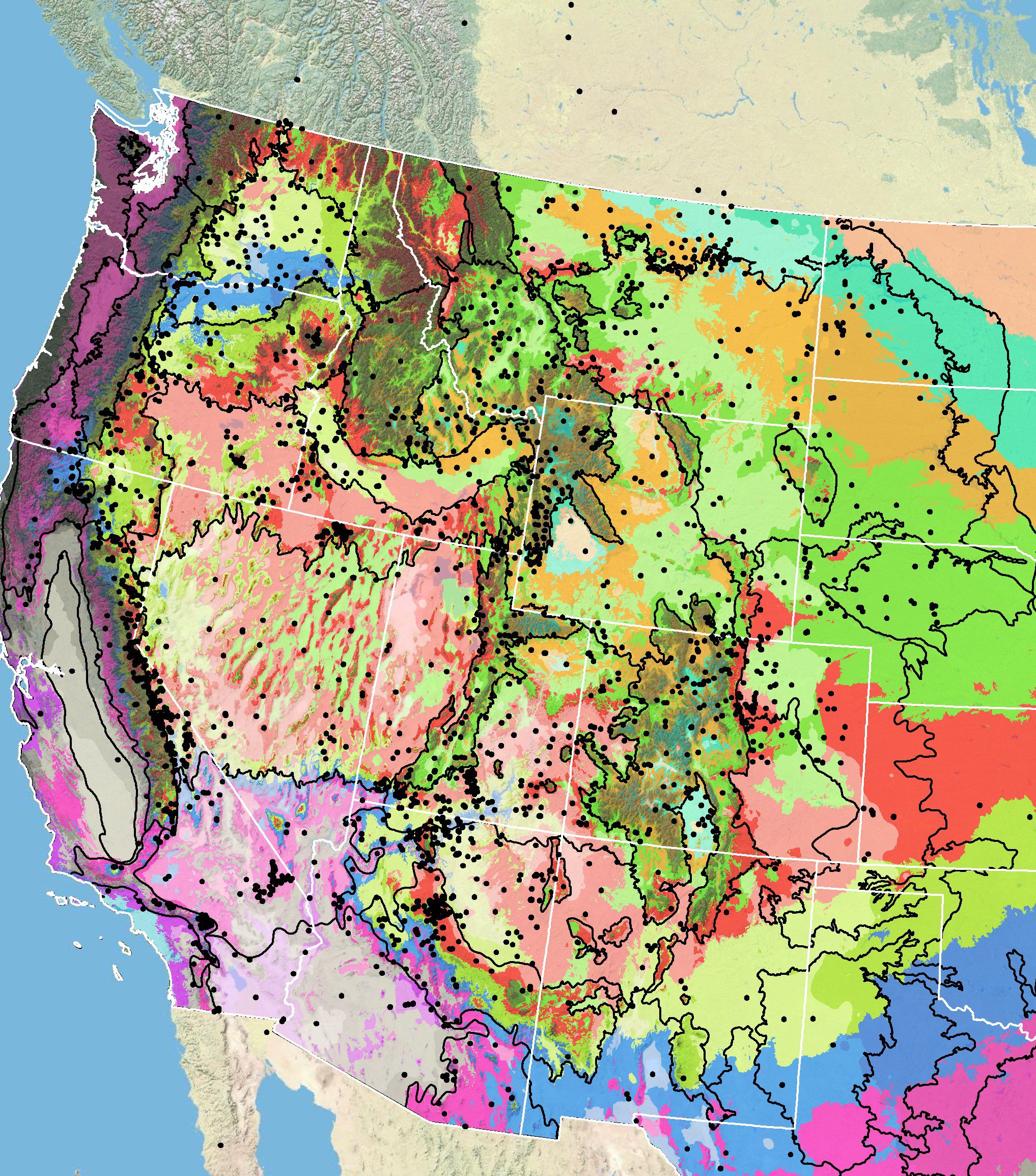 |
Distribution of hoary tansyaster (black circles) based on geo-referenced herbarium specimens and observational data from 1849-2016. Generalized provisional seed zones (colored regions) are overlain by Omernik Level III Ecoregions (black outlines). Map prepared by M. Fisk, USGS. | Semi-desert grasslands, Prairie, Low sage, Salt desert, Sagebrush, Warm desert, Mountain brush, Pinyon-Juniper, Aspen, Dry forest, Mesic forest | 11,000 | 0 | 60 | 8 | Sand, Loam, Coarse - Gravelly, rocky | Rocky, gravelly, Coarse | Neutral, Acidic, Alkaline | Tolerates pH range 6 to 8.4, but it is more common on alkaline soils. | Moderate | Hoary tansyaster grows well on medium- to coarse-textured soils with pH of 6 to 8.4 and rooting depths of at least 10 in (25 cm) (Tilley et al. 2014). It is common in loamy to sandy alkaline soils with gravel and rocks. | Pioneer, Early | Fire, Grazing, Soil disturbance | Hoary tansyaster is an early colonizer in both primary and secondary succession. It establishes readily from shattered seed. It is common on disturbed sites and its abundance and persistence may benefit from periodic disturbance. It is used by many wildlife species, but is little used by cattle. | Full sun | Head, Panicle, Raceme | 11-100 | Blue, Pink, Purple, White | Perfect, Female (pistillate) | Outcrossing | Biotic (animal) | Bees, Butterflies, Flies | Achene | Indeterminate | Timing of flowering varies among varieties and generally occurs over a long period. | Indehiscent | Fruit | Animals, Gravity, Wind | Rapid | Late spring, Early summer, Summer, Late summer, Early fall, Fall | No | Four to five weeks | June, July, August, September, October, November | Fruit | Dry fruit, Hard seed, Pappus expanded | brown | Aphids, Insects, Diseases (fungi), Rodents | Insects and damage visible, Low fill of seed/fruit, Mold or disease visible, Obvious predation, Seeds shriveled or malformed | Indeterminate | Variable | Cut test (individual seed or seedhead), X-ray | Narrow (<1 wk) | Plucking, Stripping, Swatting/beating | Containers, Dust masks, Gloves, Racquets | Dry thoroughly, Discard bulky vegetative material, Control for insects, Protect from rodents, Store in breathable containers, Protect from overheating | Seeds collected during cool or wet periods require careful and immediate drying. Vegetative material is sticky making careful drying necessary. | Break apart inflorescence to extract individual fruits or seeds, Remove seed appendages (i.e. pappus/ wings), Remove extra vegetative material (i.e. leaves, stems, etc.) | Yes | 0.15 | 0.00 | 0.83 | 121 | Not dormant | Yes | 2-3 days | Species | No | 91 | 30 | 99 | 121 | 91 | 68 | 99 | 122 | 89 | 49 | 99 | 94 | 1,116,176 | 252,000.00 | 2,180,769.00 | 121 | 921,408 | 405,784.00 | 1,949,184.00 | 94 | Orthodox | Unknown | Yes | Row cover, Weed fabric | Stratification (fall/winter seeding, artificial) | Drill, Hilling | Fall, Late fall | 0.35 to 2 lb/acre PLS or | <0.25 | No, Trial results provided | Yes | Yes | One | July, August, September, October | Indeterminate | Poor | Hand, Mechanical, Combine, Vacuum harvester, Swather | 200-400 lbs/acre bulk | 1-2 | Stratification (fall/winter seeding, artificial) | Yes | Stratification (fall/winter seeding, artificial) | Broadcast, Drill | Fall, Late fall | <0.25 | Add to overall seed mix if broadcast seeding and covering, Mix with other small-seeded species if drill seeding, Seed with other forbs in pre-selected patches | Establish forb patches, Replace time to seed production, Improve establishment, Improve return on small or expensive seed lots | ||||||||||||
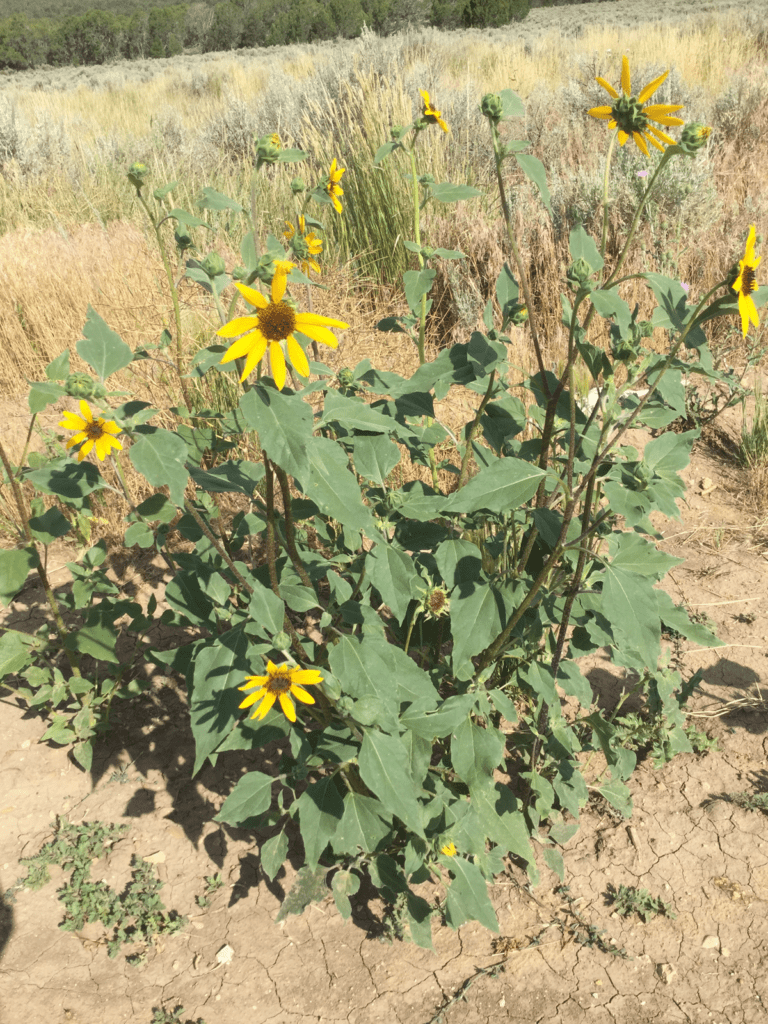
| Common sunflower | Aster | Asteraceae | Helianthus | annuus | Yes | Yes | Common | The genus (other species) | No | Annual | Short-lived (1-3 yrs) | Forb | Erect/ascending | 36 | 120 | Yes | No | Alternate, Opposite | Annual plant | Simple | Tap and fibrous | 107 | AZ, CA, CO, DC, DE, IA, ID, IL, IN, KS, MD, MI, MN, MO, MT, ND, NE, NJ, NM, NV, NY, OH, OK, OR, PA, SD, TX, UT, VA, WA, WI, WV, WY | Distribution of common sunflower (black circles) based on geo-referenced herbarium specimens and observational data from 1828-2019). Generalized provisional seed zones (colored regions) are overlain by Omernik Level III Ecoregions (black outlines). Interactive maps, legends, and a mobile app are available. Map prepared by Sarah Barga and Benton Spendlove USFS RMRS. The species is native to the western United States and has spread across much of the country and to other countries by human dispersal and hybridization. |
Semi-desert grasslands, Prairie, Salt desert, Sagebrush, Riparian, Mountain brush, Pinyon-Juniper, Dry forest | 9 | 0 | 16 | 6 | Clay, Silt, Sand, Loam, Coarse - Gravelly, rocky | Coarse, Medium | Neutral, Acidic, Alkaline, Saline | Common sunflower is recommended for revegetation on clay, loam, silt, gravel, and sand soils and said to be tolerant of acidic and alkaline conditions, metals, and salt. | Deep, Moderate | It occurs on a range of soil textures, particularly on disturbed sites. It has been found on sand dunes and on serpentine soils. | Pioneer | Fire, Soil disturbance | Colonizes disturbed, weedy, and burned sites. Also occurs in shrub and forest areas where the overstory has been removed mechanically. | Full sun | Head | >100 | Yellow | Perfect | Ray flowers are sterile. Disk flowers are perfect. | Outcrossing | Primarily outcrossing, but some selfing can occur. | Biotic (animal) | Bees, Beetles, Butterflies, Insects, Wasps | Achene | Indeterminate | Fruits are cypselas. Flowering within heads and within plants is indeterminate. | Indehiscent | Fruit | Animals, Gravity | Moderate | Spring, Late spring, Early summer, Summer, Late summer, Early fall | No | 49 to 56 days | June, July, August, September, October | Infloresence | Dry fruit, Hard seed | Gray to brown or black | Weevils, Insects, Diseases (fungi), Rodents, Birds, Livestock, Native ungulates | Insects and damage visible, Low fill of seed/fruit, Mold or disease visible, Obvious predation, Seeds shriveled or malformed | Indeterminate | Indeterminate | Cut test (individual seed or seedhead), Fingernail pressure test, X-ray | Moderate (1-3 wks) | Clipping, Swatting/beating, Mechanical (extensive monocultures) | Containers, Dust masks, Gloves, Hoppers, Paddles, Combine/swathers (for large monocultures) | Dry thoroughly, Discard bulky vegetative material, Control for insects, Protect from rodents, Store in breathable containers, Protect from overheating | Break apart inflorescence to extract individual fruits or seeds, Break apart fruit structures to extract individual seeds, Remove extra vegetative material (i.e. leaves, stems, etc.) | Yes | 0.30 | 0.30 | 0.80 | 45 | Physiological (needs stratification), Not dormant | Yes | 2 days | Species | Yes | 7 days | Species | 98 | 95 | 99 | 45 | 92 | 73 | 99 | 45 | 94 | 68 | 99 | 43 | 73,226 | 56,770.00 | 98,780.00 | 45 | 67,759 | 51,379.00 | 87,272.00 | 43 | Orthodox | Yes | Less than 5 unless kept in cold storage. | Yes | Stratification (fall/winter seeding, artificial), Afterripening | Drill | Fall, Late fall | 5-10 PLS/linear ft | <0.25, 0.25-0.5 | No | Yes | Yes | One | October | Indeterminate | Moderate | Mechanical, Combine | 300-450 lbs/acre at 95% purity | 1-2 | Stratification (fall/winter seeding, artificial), Afterripening | Yes | Stratification (fall/winter seeding, artificial), Afterripening | Drill | Fall, Late fall | <0.25, 0.25-0.5 | Add to overall seed mix if broadcast seeding and covering, Seed with other forbs in pre-selected patches | ||||||||||||||||
 |
USDI Bureau of Land Management (BLM) CP 3 Seeds of Success (SOS) | Common sunflower | Aster family | Asteraceae | Helianthus | annuus | No | Yes | Common | The genus (other species) | No | Annual | Short-lived (1-3 yrs) | Forb | Erect/ascending | 120 | 36 | Yes | No | Alternate, Opposite | Annual plant | Simple | Tap and fibrous | 107 | AZ, CA, CO, DC, DE, IA, ID, IL, IN, KS, MD, MI, MN, MO, MT, ND, NE, NJ, NM, NV, NY, OH, OK, OR, PA, SD, TX, UT, VA, WA, WI, WV, WY | 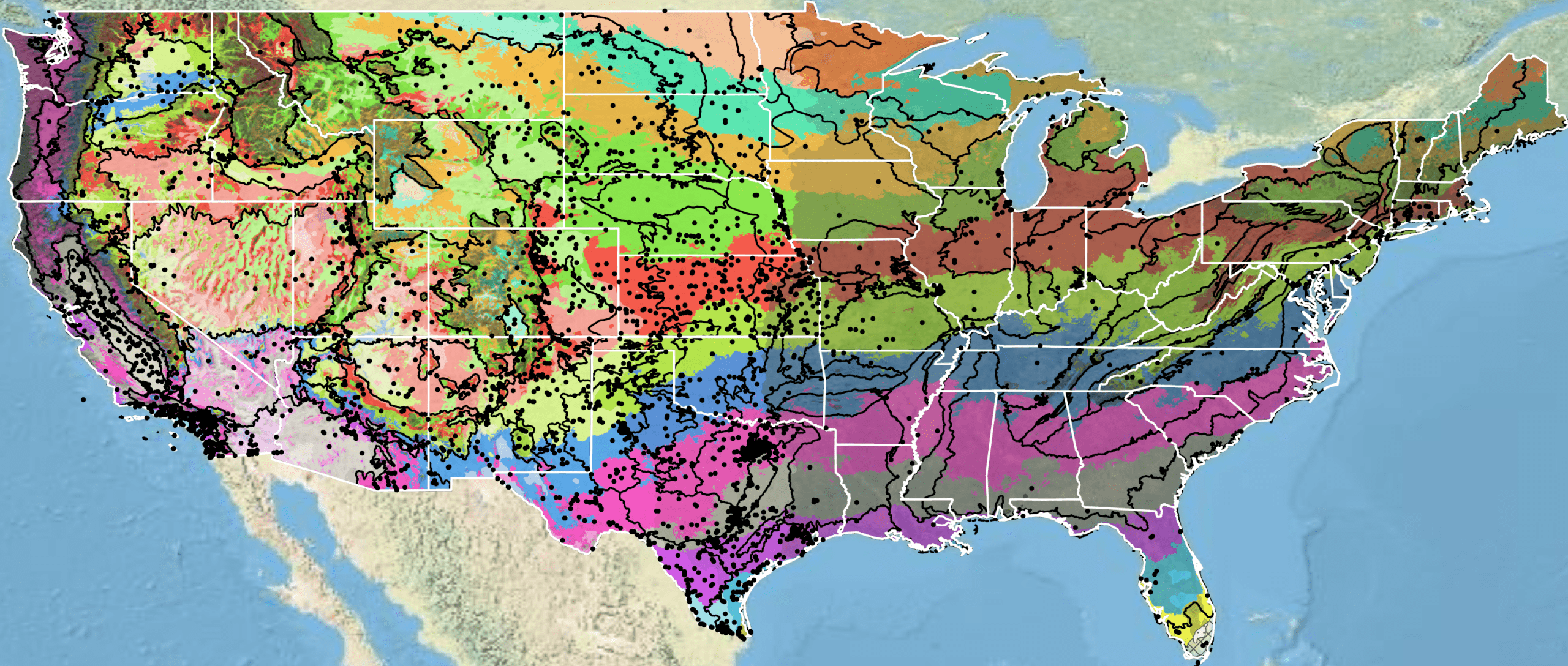 |
Distribution of common sunflower (black circles) based on geo-referenced herbarium specimens and observational data from 1828-2019 (CPNWH 2020; SEINet 2020; USDI USGS 2020). Generalized provisional seed zones (colored regions) (Bower et al. 2014) are overlain by Omernik Level III Ecoregions (black outlines) (Omernik 1987; USDI EPA 2018). Interactive maps, legends, and a mobile app are available (USDA FS WWETAC 2017; https://www.fs.usda.gov/wwetac/Seedzonemapping.php). Map prepared by Sarah Barga and Benton Spendlove USFS RMRS. The species is native to the western United States, but has expanded across much of North America and to other continents via introductions and hybridization. |
Semi-desert grasslands, Prairie, Salt desert, Sagebrush, Mountain brush, Pinyon-Juniper | 9,840 | 0 | 16 | 6 | Clay, Silt, Sand, Loam, Coarse - Gravelly, rocky | Medium | Neutral, Acidic, Saline | It is recommended for Arizona and Utah revegetation sites on clay, loam, silt, gravel, and sand soils and said to be tolerant of acidic and alkaline conditions, metals, and salt. | Deep, Moderate | Common on many soil types, especially on disturbed sites. | Pioneer | Fire, Soil disturbance | Early colonizer of eroded sites, abandoned agricultural fields, and on sagebrush, saltbush desert, and pinyon-juniper sites following burning or overstory removal. Usually declines within a few years. | Full sun | Head | >100 | Yellow, Brown | Perfect | The 17-30 yellow ray florets are sterile, while the 150 or more brown to reddish disk florets are perfect. | Outcrossing | Outcrossing, but self-pollination can occur. | Biotic (animal) | Bees, Butterflies, Flies, Wasps | Achene | Indeterminate | Fruit is a cypsela. Flowering is indeterminate within a flower head. | Indehiscent | Fruit | Animals, Gravity | Moderate | Gravity dispersed seeds generally fall within 3 feet of the plant, they may be moved farther by seed predators. | Spring, Late spring, Early summer, Summer, Late summer, Early fall | No | 49 to 56 days | June, July, August, September, October | Fruit | Dry fruit, Hard seed | Gray to brown. The cypsela is black | Weevils, Insects, Rodents, Birds, Livestock, Native ungulates | Insects and damage visible, Low fill of seed/fruit, Mold or disease visible, Obvious predation, Seeds shriveled or malformed | Indeterminate | Somewhat indeterminate. Collect after petals wither and seeds and fruits are dry and hard. | Cut test (individual seed or seedhead), Fingernail pressure test, X-ray | Moderate (1-3 wks) | Clipping, Swatting/beating, Mechanical (extensive monocultures) | Clippers, Containers, Dust masks, Gloves, Hoppers, Combine/swathers (for large monocultures) | Dry thoroughly, Discard bulky vegetative material, Control for insects, Protect from rodents, Store in breathable containers, Protect from overheating | Freeze or treat for insect control if needed. | Break apart inflorescence to extract individual fruits or seeds, Remove extra vegetative material (i.e. leaves, stems, etc.) | Yes | 0.30 | 0.30 | 0.80 | 45 | Physiological (needs stratification), Not dormant | Yes | Yes | 1 week | Species | 98 | 95 | 99 | 45 | 92 | 73 | 99 | 45 | 94 | 68 | 99 | 43 | 73,226 | 56,770.00 | 98,780.00 | 45 | 67,750 | 51,379.00 | 87,272.00 | 43 | Orthodox | Yes | Short-lived, less than 5 years. Cold storage needed to maximize longevity. | Yes | Stratification (fall/winter seeding, artificial) | Drill | Fall, Late fall | 5-10 PLS/linear foot | <0.25, 0.25-0.5 | No | Yes | Yes | One | June, July, August, September, October | Indeterminate | Moderate | Mechanical | 300-450 lbs/acre at 95% purity | 1-2 | Yes | Stratification (fall/winter seeding, artificial) | Fall, Late fall | <0.25, 0.25-0.5, 0.5-1 | Add to overall seed mix if broadcast seeding and covering, Seed with other forbs in pre-selected patches | |||||||||||||||
 |
J. Cane, USDA ARS. | Douglas’ dustymaiden | Aster family | Asteraceae | Chaenactis | douglasii | https://westernforbs.org/species/douglas-dustymaiden-chaenactis-douglasii/ | No | Yes | Yes | Common | The species (infrataxa) | Yes | Annual, Biennial, Perennial | Short-lived (1-3 yrs) | Longevity varies among populations. Shorter lived plants are more common in dry areas. | Forb | Clumping/caespitose, Decumbent/prostrate/spreading, Erect/ascending | 36 | 2 | Yes | Yes | Alternate | Herbaceous perennial (dies back annually) | Simple | Tap | 15 | AZ, CA, CO, ID, MT, ND, NM, NV, OR, SD, UT, WA, WY, AB, BC, SK | 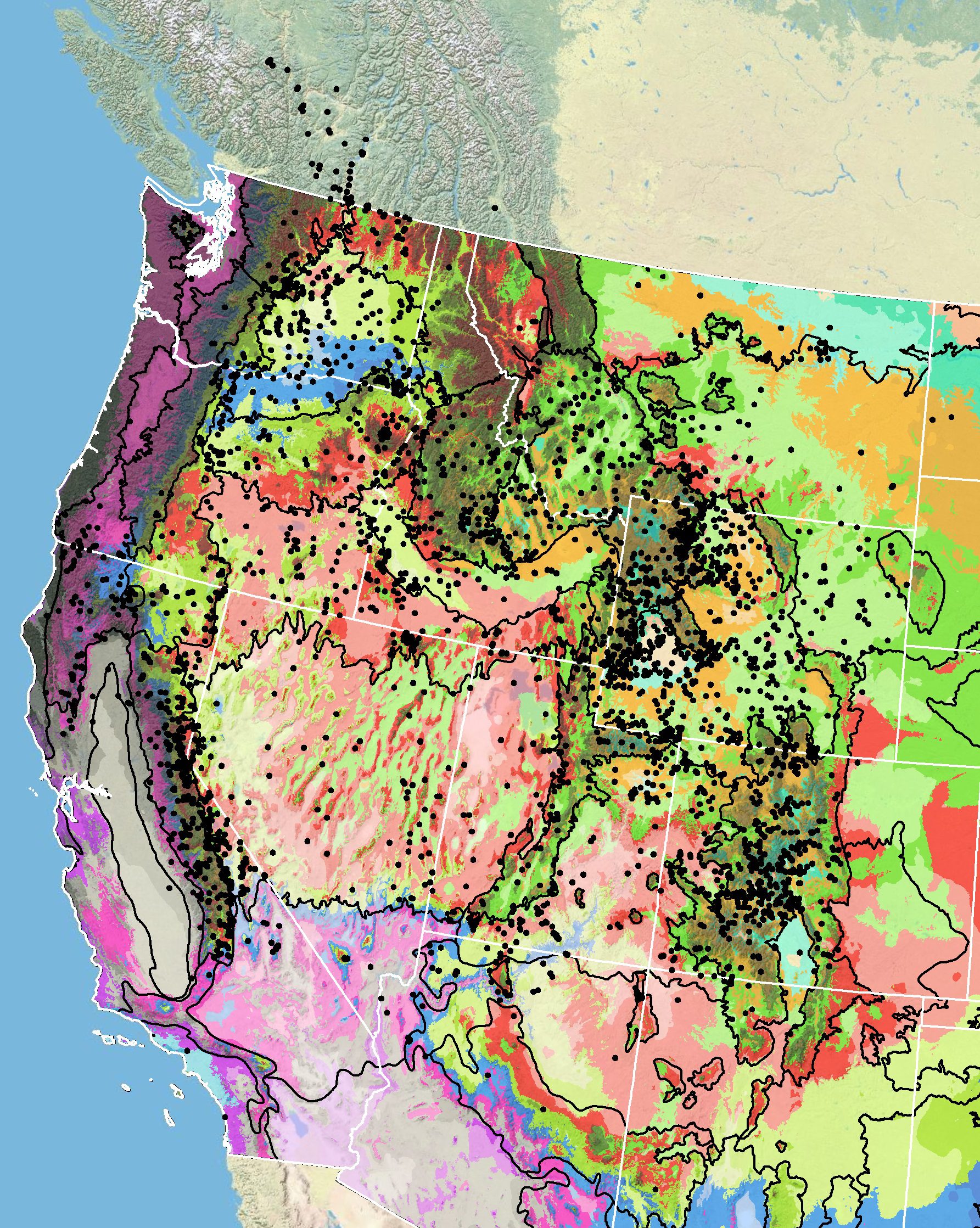 |
Distribution of Douglas’ dustymaiden (black circles) based on geo-referenced herbarium specimens and observational data from 1881-2016. Generalized provisional seed zones (colored regions) are overlain by Omernik Level III Ecoregions (black outlines). Map prepared by M. Fisk, USGS. | Semi-desert grasslands, Prairie, Salt desert, Sagebrush, Mountain brush, Pinyon-Juniper, Dry forest | 13,100 | 0 | 7 | Silt, Sand, Coarse - Gravelly, rocky | Rocky, gravelly, Coarse | Neutral, Acidic, Alkaline, Saline | Reported from saline (0.06 - 0.5 dS/m) and pH 4.2 to 7.9 soils, but also on basic soils. | Deep, Moderate, Shallow | Grows on a variety of substrates. | Pioneer, Early, Mid, Late (climax) | Fire, Soil disturbance | Full sun | Cyme, Head | 11-100 | Pink, White | Perfect | Heads may contain ray and disk flowers. Some heads may contain only ray or disk flowers. | Selfing, Outcrossing | Seed production is greatly improved by cross-pollination. | Biotic (animal) | Bees | Achene | Indeterminate | Indehiscent | Fruit | Gravity, Wind | Moderate | Ripening is highly variable within and among plants of a population. | Spring, Late spring, Early summer, Summer, Late summer | No | 28 - 35 | June, July, August, September, October | Fruit | Dry fruit, Hard seed, Pappus expanded | Gold to black | Insects and damage visible, Low fill of seed/fruit, Mold or disease visible, Obvious predation, Seeds shriveled or malformed | Indeterminate | Variable. | Cut test (individual seed or seedhead), Fingernail pressure test, X-ray, Other | Moderate (1-3 wks) | Clipping, Plucking, Stripping, Swatting/beating | Clippers, Containers, Dust masks, Gloves | 0.33 lbs/hr | Dry thoroughly, Discard bulky vegetative material, Control for insects, Protect from rodents, Store in breathable containers, Protect from overheating | Dry seed collections immediately, especially if collected in fall when moisture content may be high. | Break apart inflorescence to extract individual fruits or seeds, Remove seed appendages (i.e. pappus/ wings), Remove extra vegetative material (i.e. leaves, stems, etc.) | Yes | 0.19 | 0.02 | 0.70 | 101 | Physiological (needs stratification), Morphological (needs afterripening) | No | No | 96 | 78 | 98 | 100 | 93 | 70 | 99 | 101 | 92 | 79 | 99 | 67 | 374.723 | 210,780.00 | 620,000.00 | 101 | 326,999 | 208,802.00 | 565,440.00 | 67 | Orthodox | Yes | 5 yrs | Yes | Row cover, Weed fabric, Sawdust, Sand | Stratification (fall/winter seeding, artificial), Seed coating (fungicide, fertilizer, etc.) | Drill, Hilling | Fall, Late fall | 20 - 30 seeds/ft; 3 lbs PLS/acre; 12 - 25 seeds/hole (if weed fabric is used) | <0.25 | No | Yes | No | One | June, July | Indeterminate | Moderate | Hand, Mechanical, Combine, Vacuum harvester | 3-5 on a scale of 1-9, where1 indicates extremely high seed yield. | 1-2 | Stratification (fall/winter seeding, artificial), Seed coating (fungicide, fertilizer, etc.) | Yes | Stratification (fall/winter seeding, artificial) | Broadcast, Drill | Fall, Late fall | <0.25 | Add to overall seed mix if broadcast seeding and covering, Mix with other small-seeded species if drill seeding, Seed with other forbs in pre-selected patches | Establish forb patches, Replace time to seed production, Improve establishment, Improve return on small or expensive seed lots | |||||||||||||
 |
©Al Schneider, swcoloradowildflowers.com. | Orange agoseris | Aster family | Asteraceae | Agoseris | aurantiaca | https://westernforbs.org/species/orange-agoseris-agoseris-aurantiaca/ | No | Yes | Yes | Common | Both infrataxa and genus | Yes | Perennial | Short-lived (1-3 yrs), Long-lived (4 or more yrs) | Forb | Decumbent/prostrate/spreading, Erect/ascending | 32 | 12 | No | Yes | Herbaceous perennial (dies back annually) | Simple | Tap | AK, AZ, CA, CO, ID, MT, NM, NV, OR, SD, UT, WA, WY, AB, BC, NT, ON, YT |  |
Distribution of orange agoseris (black circles) based on geo-referenced herbarium specimens and observational data from 1876-2018. Generalized provisional seed zones (colored regions) are overlain by Omernik Level III Ecoregions (black outlines). Map prepared by M. Fisk, USDI USGS. | Semi-desert grasslands, Sagebrush, Mountain brush, Pinyon-Juniper, Aspen, Dry forest, Mesic forest | 11,800 | 650 | Clay, Silt, Sand, Loam, Coarse - Gravelly, rocky | Medium | Deep, Moderate, Shallow | Grows in nutrient poor soils, but its abundance may be greater and growth better on soils with higher nutrient content. | Early, Mid | Fire, Soil disturbance | Full sun, Partial sun | Head | 11-100 | Orange, Pink, Yellow | Perfect | Biotic (animal) | Bees, Butterflies, Flies, Insects | Achene | Indeterminate | Indehiscent | Fruit | Wind | Rapid | Late spring, Early summer, Summer, Late summer, Early fall | No | May, June, July, August, September | Fruit | Dry fruit, Hard seed, Pappus expanded | Achenes are brown | Indeterminate | Cut test (individual seed or seedhead), Fingernail pressure test, X-ray | Moderate (1-3 wks) | Plucking, Stripping | Containers, Gloves | Dry thoroughly, Discard bulky vegetative material, Control for insects, Protect from rodents, Store in breathable containers | Avoid collecting stem material as it contains milky juice. Dry seed collection immediately. | Break apart inflorescence to extract individual fruits or seeds, Remove seed appendages (i.e. pappus/ wings), Remove extra vegetative material (i.e. leaves, stems, etc.) | No | 0.17 | 0.04 | 0.37 | 11 | Physiological (needs stratification) | Yes | 12 hrs | No | 94 | 88 | 99 | 11 | 89 | 80 | 95 | 11 | 86 | 25 | 97 | 11 | 188,955 | 132,600.00 | 330,000.00 | 11 | 143,525 | 78,375.00 | 182,089.00 | 11 | Orthodox | Unknown | No | Stratification (fall/winter seeding, artificial) | May, June, July, August | Indeterminate | Hand | Stratification (fall/winter seeding, artificial) | No | Stratification (fall/winter seeding, artificial) | ||||||||||||||||||||||||||||||||||||||||||||
 |
Genevieve Walden, Cal Photos. | Annual agoseris | Aster family | Asteraceae | Agoseris | heterophylla | https://westernforbs.org/species/annual-agoseris-agoseris-heterophylla/ | No | Yes | Yes | Unknown | Both infrataxa and genus | Yes | Annual | Short-lived (1-3 yrs) | Annual | Forb | Decumbent/prostrate/spreading, Erect/ascending | 24 | 1 | No | Yes | Herbaceous perennial (dies back annually) | Simple | Tap | AZ, CA, CO, ID, MT, NM, NV, UT, WA |  |
Distribution of annual agoseris (black circles) based on geo-referenced herbarium specimens and observational data from 1864-2018. Generalized provisional seed zones (colored regions) are overlain by Omernik Level III Ecoregions (black outlines). Map prepared by M. Fisk, USDI USGS. | Semi-desert grasslands, Prairie, Low sage, Sagebrush, Chaparral, Mountain brush, Oak woodlands, Dry forest, Mesic forest | 7,550 | 0 | Clay, Sand, Loam, Coarse - Gravelly, rocky | Fine | Deep, Moderate, Shallow | Present on both serpentine and non-serpentine soils. | Early | Fire, Grazing, Soil disturbance | Full sun | Head | 2-10, 11-100, >100 | Orange, Yellow | Perfect | Selfing, Outcrossing | Depending on variety, may be self-pollinating or self-incompatible. | Biotic (animal) | Bees | Achene | Determinate | Indehiscent | Fruit | Wind | Rapid | Early spring, Spring, Late spring, Early summer, Summer, Late summer, Early fall | No | 30 - 90 days | May, June, July, August | Fruit | Dry fruit, Hard seed, Pappus expanded | Brown, ridged | Insects | Insects and damage visible | Indeterminate | Moderate (1-3 wks) | Plucking, Stripping | Containers, Gloves | Dry thoroughly, Control for insects, Protect from rodents, Store in breathable containers, Protect from overheating | Avoid collecting stem material as it contains milky juice. Dry seeds immediately. | Break apart inflorescence to extract individual fruits or seeds, Remove seed appendages (i.e. pappus/ wings), Remove extra vegetative material (i.e. leaves, stems, etc.) | No | 0.28 | 0.09 | 0.40 | 6 | Physiological (needs stratification), Not dormant | No | No | 97 | 88 | 99 | 6 | 97 | 95 | 99 | 6 | 95 | 92 | 98 | 6 | 557,273 | 308,564.00 | 731,600.00 | 6 | 336,716 | 206,581.00 | 531,100.00 | 6 | Orthodox | Unknown | 2.5 yrs | No | No | Poor | Stratification (fall/winter seeding, artificial) | No | Broadcast, Drill | Fall | Add to overall seed mix if broadcast seeding and covering, Mix with other small-seeded species if drill seeding, Seed with other forbs in pre-selected patches | Establish forb patches, Replace time to seed production, Improve establishment, Improve return on small or expensive seed lots | ||||||||||||||||||||||||||||||||||||||
 |
BLM ID 330 SOS. | Nakedstem sunray | Aster family | Asteraceae | Enceliopsis | nudicaulis | https://westernforbs.org/species/nakedstem-sunray-enceliopsis-nudicaulis/ | No | Yes | Yes | Unknown | No | Perennial | Long-lived (4 or more yrs) | Forb | Erect/ascending | 24 | 4 | No | Yes | Alternate | Herbaceous perennial (dies back annually) | Simple | Tap | AZ, CA, CO, ID, NV, OR, UT | 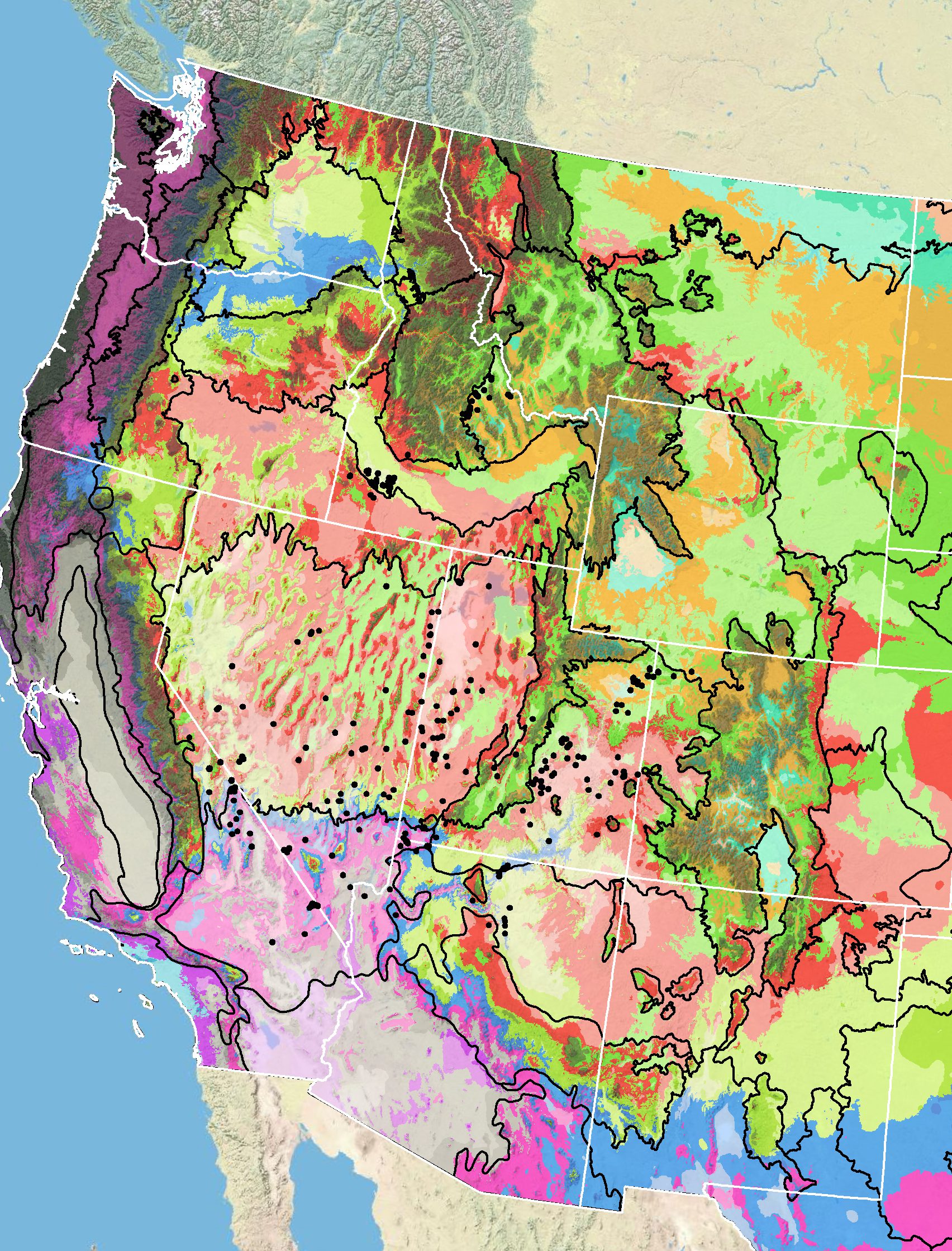 |
Distribution of nakedstem sunray (black circles) based on geo-referenced herbarium specimens and observational data from 1881-2016. Generalized provisional seed zones (colored regions) are overlain by Omernik Level III Ecoregions (black outlines). Map prepared by M. Fisk, USDI USGS. | Sagebrush, Warm desert, Pinyon-Juniper | 7,600 | 2,300 | Clay, Sand, Loam, Coarse - Gravelly, rocky | Rocky, gravelly, Fine | Alkaline, Saline | Deep | Often on rocky soils or hard, compacted clays that are poorly drained. | Full sun | Head | >100 | Yellow | Perfect, Female (pistillate) | Ray flowers are pistillate but sterile, disk florets are perfect and fertile. | Outcrossing, Facultative apomictic | Achene | Indeterminate | Indehiscent | Fruit | Late spring, Early summer, Summer, Late summer | No | May, June, July, August | Fruit, Infloresence | Dry fruit, Hard seed | Black with hairs | Birds | Insects and damage visible | Indeterminate | Cut test (individual seed or seedhead), Fingernail pressure test, X-ray | Narrow (<1 wk), Moderate (1-3 wks) | Clipping, Swatting/beating | Clippers, Containers, Gloves, Racquets | Dry thoroughly, Discard bulky vegetative material, Control for insects, Protect from rodents, Store in breathable containers, Protect from overheating | Break apart inflorescence to extract individual fruits or seeds, Remove extra vegetative material (i.e. leaves, stems, etc.) | Yes | 0.42 | 0.18 | 0.99 | 4 | Not dormant | Yes | 12 hrs | No | 98 | 98 | 98 | 4 | 96 | 92 | 98 | 4 | 92 | 84 | 97 | 4 | 66,162 | 43,901.00 | 84,013.00 | 4 | 62,188 | 39,581.00 | 80,686.00 | 4 | Unknown | Yes | Row cover, Sawdust, Other mulch | Stratification (fall/winter seeding, artificial), Seed coating (fungicide, fertilizer, etc.) | Drill | Fall, Late fall | 20 - 30 PLS/ft | 0.25-0.5 | No | Unknown | Yes | One | July, August | Indeterminate | Poor | Hand, Vacuum harvester | 24.6 (1.5 - 105) lbs/acre | >3 | No | Stratification (fall/winter seeding, artificial) | Broadcast, Drill | Fall, Late fall | Add to overall seed mix if broadcast seeding and covering, Mix with other small-seeded species if drill seeding, Seed with other forbs in pre-selected patches | Establish forb patches, Replace time to seed production, Improve establishment, Improve return on small or expensive seed lots | ||||||||||||||||||||||||||||||||
 |
M. Lavin, Montana State University. | Sagebrush false dandelion | Aster family | Asteraceae | Nothocalais | troximoides | https://westernforbs.org/species/nothocalais-troximoides-sagebrush-false-dandelion/ | No | Yes | Rare | The genus (other species) | No | Perennial | Unknown | Forb | Decumbent/prostrate/spreading, Erect/ascending | 18 | 2 | 24 | 4 | No | Yes | Herbaceous perennial (dies back annually) | Simple | Tap | CA, ID, MT, NV, OR, UT, WA, WY, BC | 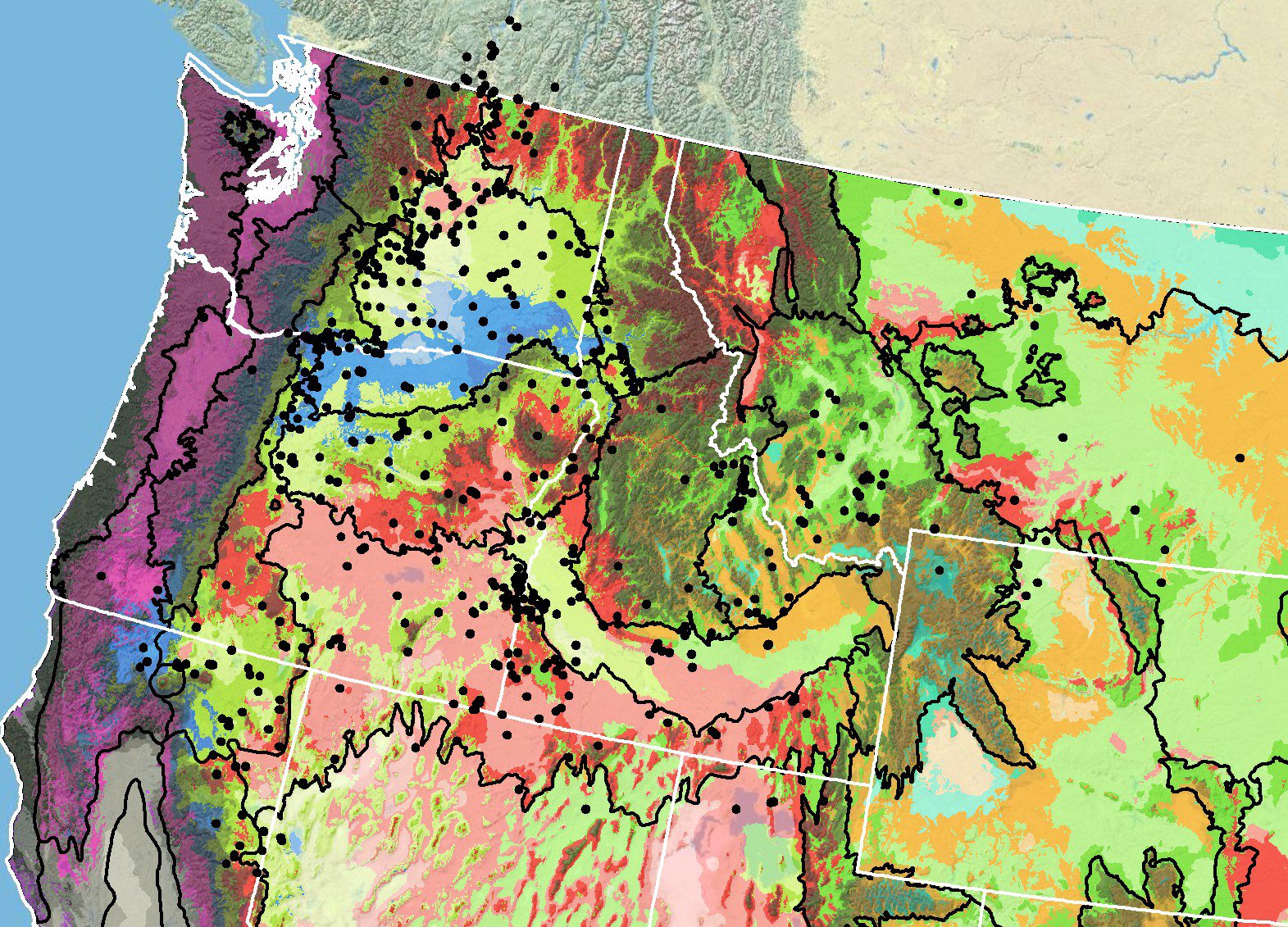 |
Distribution of sagebrush false dandelion (black circles) based on geo-referenced herbarium specimens and observational data from 1876-2016 (dates not available for all points). Generalized provisional seed zones (colored regions) are overlain by Omernik Level III Ecoregions (black outlines). Map prepared by M. Fisk, USGS. | Semi-desert grasslands, Sagebrush, Pinyon-Juniper, Oak woodlands, Dry forest | 8,763 | 160 | Clay, Silt, Sand, Loam, Coarse - Gravelly, rocky | Rocky, gravelly, Medium | Neutral, Alkaline | Deep, Moderate, Shallow | Often grows on shallow, rocky soils derived from basalt or rhyolite with soils that may be saturated in winter and spring and subject to frost heaving. | Pioneer, Early, Mid, Late (climax) | Fire, Soil disturbance | Plants may tolerate fall burns but be sensitive to spring burning. Roots are used by pocket gophers. Seeds are used by sage-grouse. |
Full sun | Head | 11-100 | Orange, Yellow | Perfect | Pollination of the species has not been studied. | Achene | Indeterminate | Flowering and fruit ripening are fairly uniform within seed heads, but vary among seed heads within individual plants and among plants in a population. | Indehiscent | Fruit | Animals, Gravity, Wind | Moderate | Dispersal rate varies with local wind speeds. | Early spring, Spring, Late spring, Early summer | No | About 2 months. | May, June, July | Fruit | Dry fruit, Hard seed, Pappus expanded, Straw, brown colored stems | Beige to light brown | Weevils, Birds | Insects and damage visible, Low fill of seed/fruit, Mold or disease visible, Obvious predation, Seeds shriveled or malformed | Indeterminate | Ripening is variable within and among plants., but uniform within seed heads. | Cut test (individual seed or seedhead), Fingernail pressure test, X-ray | Moderate (1-3 wks) | Plucking | Containers, Dust masks, Gloves | Dry thoroughly, Discard bulky vegetative material, Control for insects, Protect from rodents, Store in breathable containers, Protect from overheating | Remove vegetative material, which contains milky juice, and dry the seeds promptly to avoid molding. | Break apart inflorescence to extract individual fruits or seeds, Remove seed appendages (i.e. pappus/ wings), Remove extra vegetative material (i.e. leaves, stems, etc.) | No | 0.36 | 0.13 | 0.64 | 51 | Not dormant | No | No | 98 | 92 | 99 | 51 | 90 | 70 | 99 | 51 | 93 | 88 | 97 | 16 | 166,524 | 77,538.00 | 396,572.00 | 51 | 162,056 | 71,538.00 | 396,572.00 | 16 | Orthodox | Unknown | No | Yes | 150 lbs/acre | No | |||||||||||||||||||||||||||||||||||||||||
 |
USFS | Aspen fleabane | Aster family | Asteraceae | Erigeron | speciosus | https://westernforbs.org/species/aspen-fleabane-erigeron-speciosus/ | No | No | Yes | Common | The genus (other species) | Yes | Perennial | Long-lived (4 or more yrs) | Decades | Forb | Erect/ascending, Rhizomatous | 40 | 6 | Yes | Yes | Alternate | Herbaceous perennial (dies back annually) | Simple | Tap and fibrous | AZ, CO, ID, KS, MT, NM, NV, OR, SD, TX, UT, WA, WY, AB, BC, MX - BN, MX - SO | 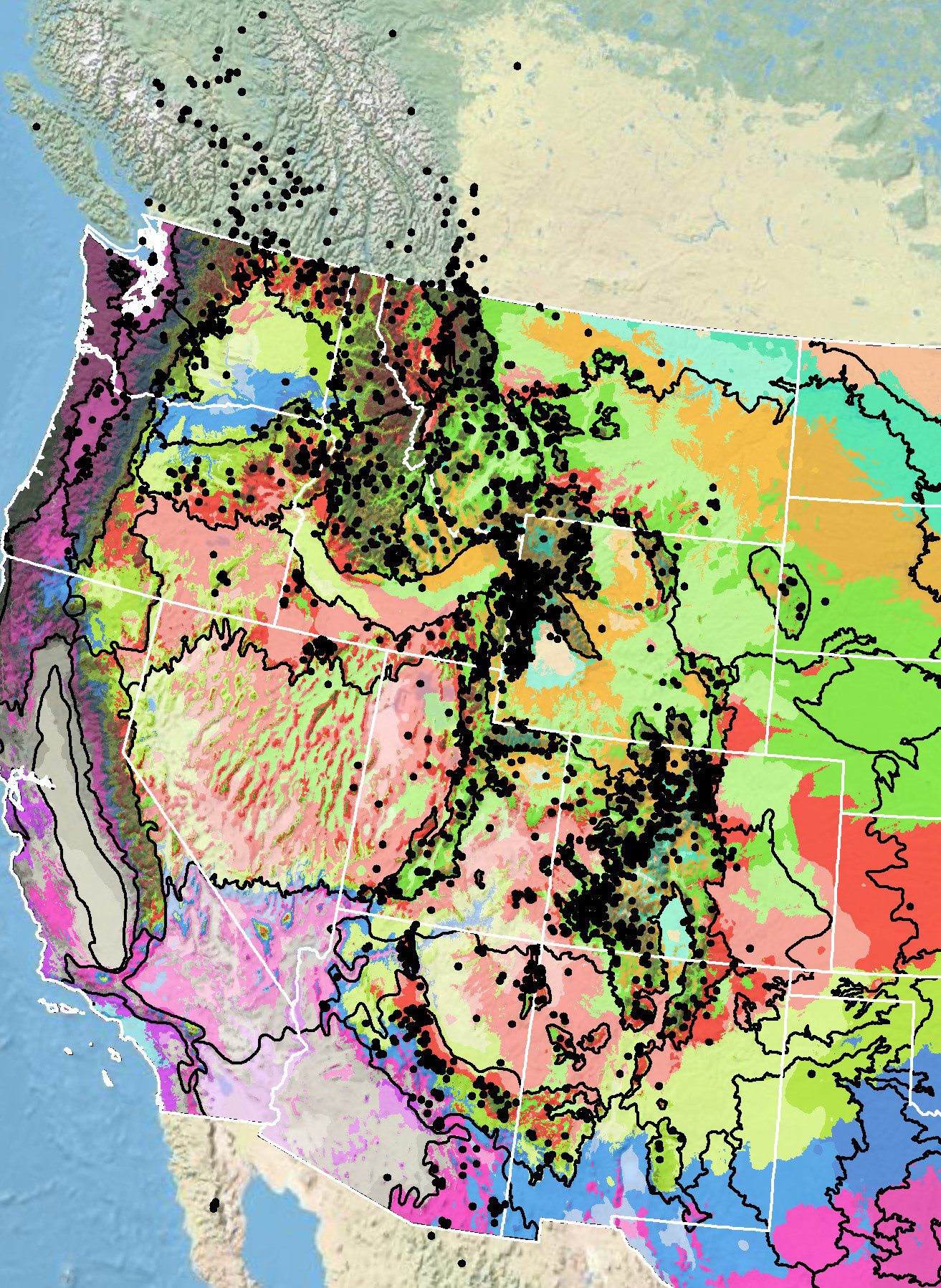 |
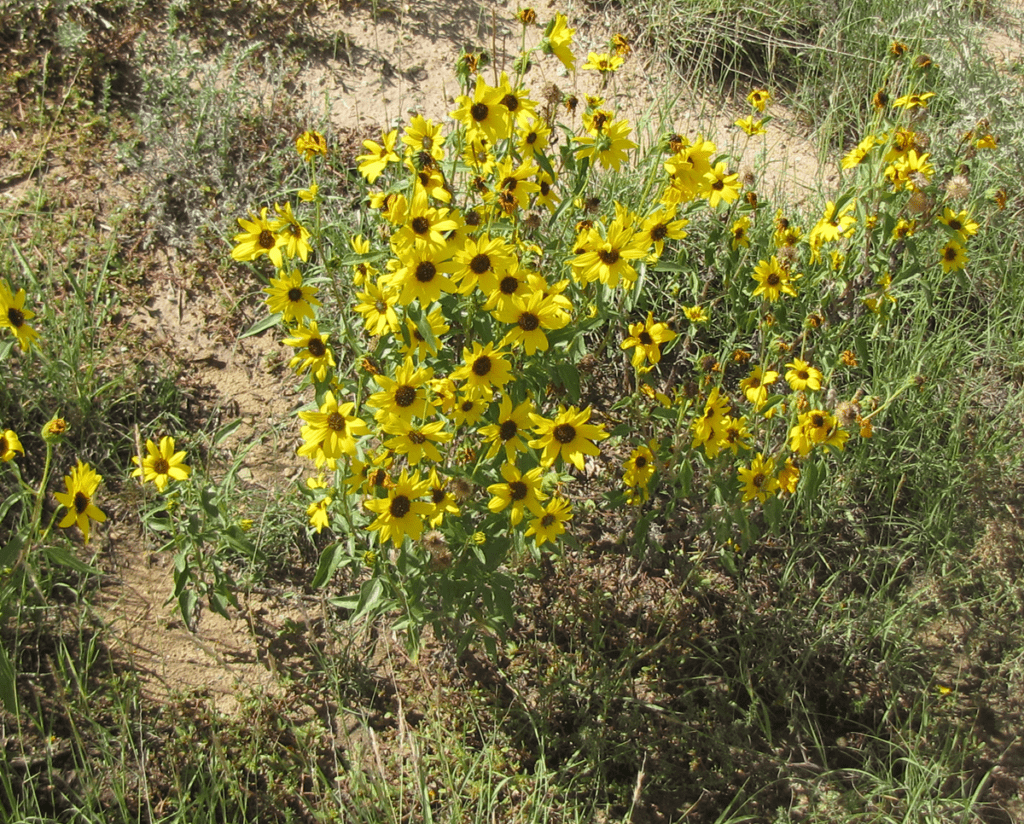
Distribution of aspen fleabane (black circles) based on geo-referenced herbarium specimens and observational data from 1870-2016. Generalized provisional seed zones (colored regions) are overlain by Omernik Level III Ecoregions (black outlines). Map prepared by M. Fisk, USGS. | Semi-desert grasslands, Prairie, Sagebrush, Riparian, Mountain brush, Aspen, Dry forest, Mesic forest, Subalpine, alpine | 11,200 | 2,000 | 25 | 16 | Clay, Silt, Sand, Loam, Coarse - Gravelly, rocky | Coarse | Neutral, Alkaline | Aspen fleabane is found on dry to moist sites with well-drained sandy, gravelly, or clay-loam calcareous or non-calcareous soils | Deep, Moderate | Pioneer, Early, Mid, Late (climax) | Fire | Often reduced by grazing | Full sun, Partial sun | Head | 11-100, >100 | Blue, Pink, Purple, White | Perfect, Female (pistillate) | Disk flowers are perfect and fertile. Ray flowers are pistillate and fertile. |
Outcrossing | Support generalist and specialist bee species. | Biotic (animal) | Bees, Beetles, Butterflies, Flies, Moths, Wasps | Achene | Determinate and indeterminate | Seed heads at the top of the plant may mature before those lower on the plant. Seeds within a seed head flower somewhat uniformly. Maturation may vary among plants in a population. | Indehiscent | Fruit | Gravity, Wind | Slow | Early summer, Summer, Late summer, Early fall, Fall | No | 30 - 60 | July, August, September, October, November | Fruit, Infloresence | Dry fruit, Hard seed, Pappus expanded | Straw, golden | Insects | Insects and damage visible, Low fill of seed/fruit | Determinate, Indeterminate | Rather uniform within the seed head. Varies among seed heads within a plant and among plants in a population. | Cut test (individual seed or seedhead) | Long (>3 wks) | Clipping, Plucking | Clippers, Containers, Gloves | Dry thoroughly, Discard bulky vegetative material, Control for insects, Protect from rodents, Store in breathable containers, Protect from overheating | Break apart inflorescence to extract individual fruits or seeds, Remove seed appendages (i.e. pappus/ wings), Remove extra vegetative material (i.e. leaves, stems, etc.) | Yes | 0.14 | 0.03 | 0.32 | 23 | Physiological (needs stratification), Not dormant | Yes | Family | Yes | 16+ days | Species | 95 | 75 | 99 | 23 | 94 | 80 | 99 | 23 | 94 | 79 | 98 | 17 | 2,451,669 | 1,064,788.00 | 3,600,000.00 | 23 | 2,249,218 | 1,439,775.00 | 3,080,160.00 | 17 | Yes | many | Yes | Drill | Fall | No | Yes | One | Good | >3 | Yes | Drill | Fall | <0.25, 0.25-0.5 | Add to overall seed mix if broadcast seeding and covering, Mix with other small-seeded species if drill seeding, Seed with other forbs in pre-selected patches | Establish forb patches, Replace time to seed production, Improve establishment, Improve return on small or expensive seed lots | |||||||||||||||||||||||
 |
USDI BLM SOS NM930 | Prairie sunflower | Aster family | Asteraceae | Helianthus | petiolaris | Yes | Yes | Common | The genus (other species) | No | Annual | Short-lived (1-3 yrs) | Annual plant. | Forb | Erect/ascending | 78 | 16 | Yes | Sometimes | Alternate | Annual plant | Simple | Tap | AK, AZ, CA, CO, DC, DE, IA, ID, IL, IN, KS, MD, MI, MN, MO, MT, ND, NE, NJ, NM, NV, NY, OH, OK, OR, PA, TX, UT, VA, WA, WI, WV, WY, AB, MB, ON, SK | 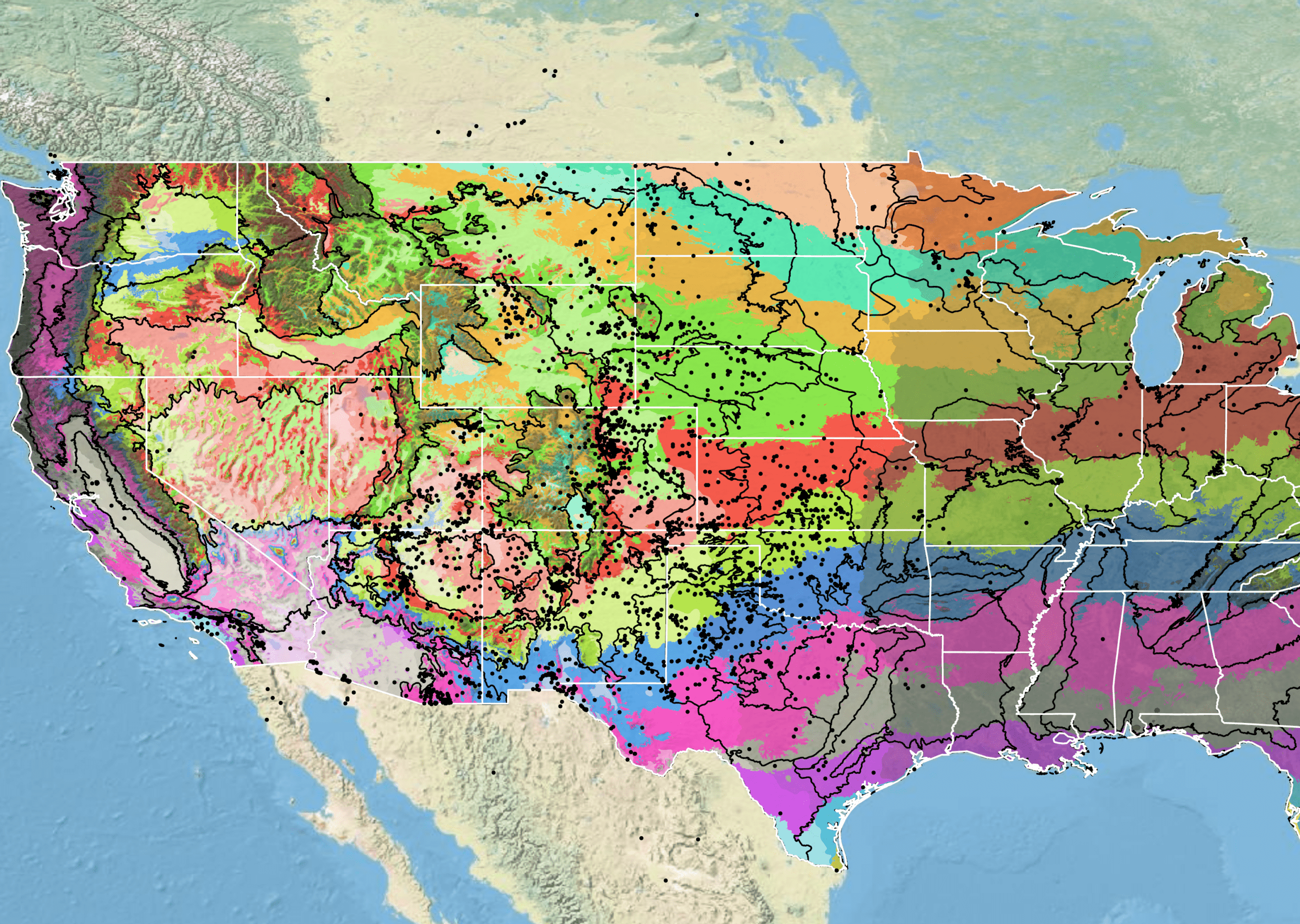 |
Distribution of prairie sunflower (black circles) based on geo-referenced herbarium specimens and observational data from 1842-2023. Generalized provisional seed zones (colored regions) are overlain by Omernik Level III Ecoregions (black outlines). Interactive maps, legends, and a mobile app are available (https://www.fs.usda.gov/wwetac/Seedzonemapping.php). Map prepared by Sarah Barga and Benton Spendlove USFS RMRS. | Semi-desert grasslands, Prairie, Salt desert, Sagebrush, Warm desert, Riparian, Pinyon-Juniper, Dry forest | 8,200 | 30 | 24 | 8 | Sand, Loam, Coarse - Gravelly, rocky | Medium | Described as non-salt tolerant, but also occurs in salt desert shrublands | Deep, Moderate | Deep sandy soils and active sand dunes are common habitats. | Pioneer, Early | Fire, Grazing, Soil disturbance | Commonly associated with early seral conditions and disturbed sites. Commonly occurs in abandoned agricultural fields, burned areas and heavily-grazed sites. | Full sun, Partial sun | Head | >100 | Yellow, Brown | Perfect | Ray flowers are sterile, disk flowers are perfect. | Outcrossing | Flowers are obligate outcrossing. | Biotic (animal) | Bees, Insects, Wasps | Achene | Indeterminate | Flowers within a head are determinate. Flowering is indeterminate within and among plants in a population. | Indehiscent | Fruit | Animals, Gravity | Slow | Dispersal can occur over as much as 3 or 4 months. | Spring, Late spring, Early summer, Summer, Late summer | No | 40 | July, August, September, October | Infloresence | Dehiscing (splitting) fruit, Dry fruit, Hard seed | Gray with darker streaks. | Insects, Rodents, Birds, Livestock, Native ungulates | Insects and damage visible, Low fill of seed/fruit, Obvious predation, Seeds shriveled or malformed | Determinate, Indeterminate | Ripening within heads is determinate, but indeterminate within and among plants in a population. | Cut test (individual seed or seedhead), Fingernail pressure test, X-ray | Long (>3 wks) | Clipping | Clippers, Dust masks, Gloves, Goggles, Hoppers | Dry thoroughly, Discard bulky vegetative material, Control for insects, Protect from rodents, Store in breathable containers, Protect from overheating | Break apart inflorescence to extract individual fruits or seeds, Break apart fruit structures to extract individual seeds, Remove extra vegetative material (i.e. leaves, stems, etc.) | No | 0.22 | 0.06 | 0.42 | 17 | Physiological (needs stratification), Physical (needs scarification), Unknown | Yes | 2 days | Genus | Yes | 7 days | Species | 96 | 78 | 99 | 17 | 91 | 73 | 98 | 17 | 96 | 91 | 98 | 15 | 162,626 | 74,000.00 | 284,550.00 | 17 | 144,109 | 71,062.00 | 206,906.00 | 15 | Orthodox | Unknown | Viability up to 20 years when stored in a jsr at 68-72F and ~22% RH. | Yes | Spring | Unknown | Yes | One | June, July, August, September, October | Good | 1500 lbs/acre (not indicated whether this was bulk or cleaned) | 1-2 | Yes |